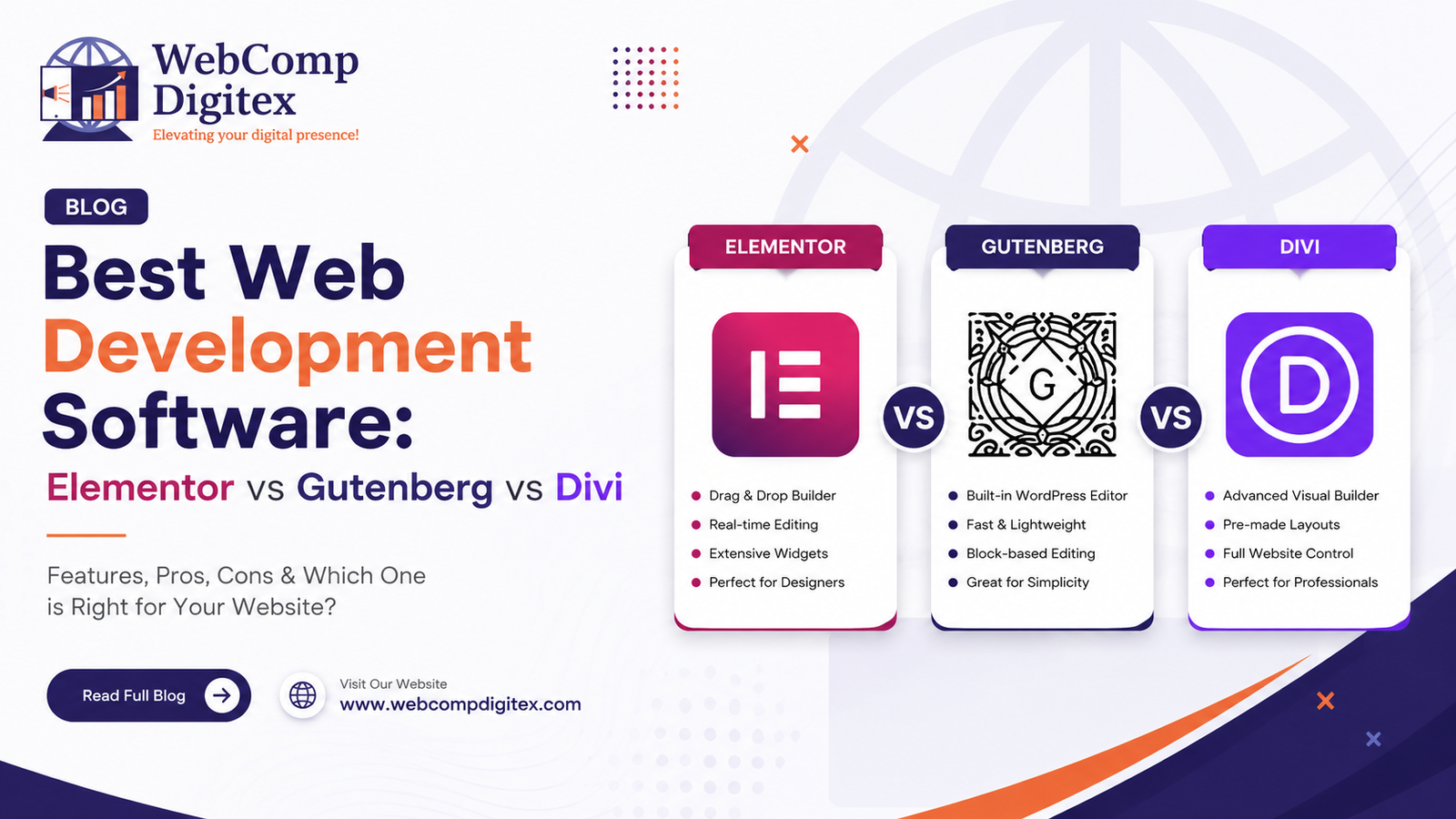
Last month, a manufacturing client from Chakan came to us frustrated. Another agency had built their site using Divi. Looked pretty, sure. But every time they wanted to change a product photo or update a specification sheet, they had to call the agency. Cost them ₹3,500 each time. After six months, they’d spent more on updates than the original site cost.
That’s the real cost of choosing the wrong builder. Not just the license fee. It’s the ongoing frustration, the dependency, the lost opportunities because updating your site feels like pulling teeth.
So let’s talk about what actually works.
Why Your Page Builder Choice Actually Matters for Business
Here’s what most web development companies won’t tell you upfront: your page builder affects everything. Site speed. Google rankings. How much you’ll spend on updates. Whether your site still works properly three years from now.
I’ve seen businesses in Hinjewadi spend ₹80,000 on a beautiful Elementor site, only to discover it loads in 8 seconds on mobile. That’s a disaster. Google penalizes slow sites. Your visitors leave. Your ad spend goes to waste.
And honestly? This happens because agencies pick builders based on what’s easy for them, not what’s right for you.
The best web development software for you depends on three things: who’s going to update your site day-to-day, what kind of customization you actually need, and how much control you want without calling a developer every time.
Let me break down each option based on real projects.
Gutenberg: The Free Option Everyone Overlooks
Gutenberg is WordPress’s built-in editor. No extra plugin needed. No annual license. And honestly, it’s gotten really good.
Here’s what I mean: we built a healthcare site for a clinic in Baner last year using just Gutenberg. The doctor updates their blog posts, adds new services, changes appointment schedules — all without any training beyond a 20-minute screen-share call.
The site loads in 1.8 seconds. Scores 94 on Google PageSpeed Insights. And because we’re not loading a heavy page builder plugin, hosting costs are ₹4,800 a year instead of ₹12,000.
When Gutenberg works perfectly:
You need a straightforward business site. Blog, services, contact page, maybe a portfolio. You or someone on your team will handle updates. You don’t need super-complex layouts or animations.
When Gutenberg falls short:
You want drag-and-drop freedom to design anything you imagine. You need really specific spacing controls or custom animations. You’re building landing pages for different campaigns every month.
The interface is clean but limited. You work with blocks — paragraph block, image block, columns block. It’s like building with LEGO. Structured, reliable, but you can’t just mold it into any shape.
At Webcomp Digitex, we recommend Gutenberg for about 40% of our clients. Mostly professional services, small clinics, consultancies. Businesses where the content matters more than flashy design.
Real advantage nobody talks about: When you eventually hire web application development services to add custom features — a booking system, a member portal, whatever — Gutenberg doesn’t get in the way. Developers actually like working with it.
Elementor: The Designer’s Favorite (With Hidden Costs)
Elementor is probably the most popular page builder in India right now. And yeah, it’s powerful. Really powerful.
We built an e-commerce site for a furniture manufacturer in Pimpri-Chinchwad using Elementor Pro. Gorgeous product showcases. Custom category pages. Video backgrounds. Pop-ups that actually convert. The client loved it.
But here’s what happened next: after three months, they wanted to add more products. Their person logged in, tried to update things, broke the layout twice, called us in panic. We realized they needed training. Not a quick call — actual training.
That’s Elementor. It gives you incredible design freedom, but there’s a learning curve. And the sites tend to run heavier.
When Elementor is worth it:
You need complete design control. You’re building custom landing pages frequently. You have someone who’ll invest time learning the system (or you’ll keep paying an agency for updates). Visual appeal is crucial to your business.
When Elementor causes problems:
Budget is tight and you can’t afford ₹7,999/year for Elementor Pro. You need a fast-loading site above everything else. You want your office person to easily update content without training.
The free version exists, but honestly, it’s limited enough that most businesses end up needing Pro within weeks. And once you’ve built your site on Elementor, switching away is painful. You’re kind of locked in.
Speed is the big trade-off. A typical Elementor site we optimize loads in 3-4 seconds. That’s after optimization. Before that? I’ve seen 7-8 seconds. For a manufacturer trying to run Google Ads, that’s burning money.
Something we learned the hard way: Elementor sites need better hosting. That ₹3,000/year shared hosting plan? Won’t cut it. You’re looking at ₹12,000-15,000 annually for hosting that can handle Elementor properly.
But the design possibilities are honestly incredible. If you’re a design-focused business — architecture firm, boutique hotel, designer brand — Elementor might justify its costs. For a custom web application development company working on complex layouts, it offers flexibility that Gutenberg simply can’t match.
Divi: The All-in-One Package (That Might Be Too Much)
Divi from Elegant Themes is kind of the veteran here. Been around forever. Comes with a theme and builder package.
Here’s my honest take after using it on maybe 30 projects: it’s powerful but clunky. The interface feels dated compared to Elementor or even Gutenberg. And the sites it produces often have bloated code.
That Chakan manufacturing client I mentioned? Their Divi site loaded in 6.5 seconds. When we rebuilt it using Gutenberg with a lightweight theme, same content, same images — 2.1 seconds.
When Divi makes sense:
You want lifetime access for a one-time fee (₹20,700 for unlimited sites, lifetime updates). You’re an agency building lots of sites. You need the included theme library.
When Divi doesn’t make sense:
Site speed matters (which, let’s be honest, it always does). You want an intuitive interface. You value clean code and easy developer handoffs.
The lifetime pricing is attractive, I’ll give them that. Pay once, use forever on unlimited sites. For agencies, that math works. For a single business website? You’re paying for features you’ll never touch.
We used to use Divi a lot at Webcomp Digitex back in 2016-2018. But honestly, we’ve moved away from it. The performance issues and the clunky editor just don’t serve our Pune clients well anymore.
One specific issue we hit repeatedly: when working with web based application development teams to add custom features, Divi’s shortcode system creates conflicts. Developers groan when we tell them a site runs Divi.
The Speed Reality Check Nobody Mentions
Here’s something crucial that most comparisons skip: page speed isn’t just about the builder. It’s about how it’s used.
I’ve seen lightweight Gutenberg sites load slowly because someone uploaded 4MB images. And I’ve seen Elementor sites load quickly because they were built carefully with optimization in mind.
But there’s a baseline reality: Elementor and Divi add more code to your site than Gutenberg. Period. They have to, because they’re doing more.
We tested this specifically last year. Built the exact same 5-page business site three times. Same content, same images (all optimized), same hosting.
- Gutenberg version: 1.9 seconds average load time
- Elementor version: 3.4 seconds
- Divi version: 4.1 seconds
All three were “optimized.” That’s just the inherent weight difference.
For a real estate business in Kharadi running Google Ads, that difference matters. A lot. We calculated they’d lose about 35% of their paid traffic with the slower sites. At ₹45,000 monthly ad spend, that’s ₹15,750 basically wasted.
The best web development software isn’t the one with the most features. It’s the one that serves your actual business needs without killing your performance.
What Actually Matters for Your Business
Forget the feature lists for a minute. Here’s what determines if a page builder works for you:
Who updates your website? If it’s you or someone without web skills, Gutenberg wins. If you’re paying an agency monthly anyway, Elementor’s complexity doesn’t matter. If you need to train an office staff member, factor in that time and frustration.
What’s your site’s job? Lead generation for a B2B manufacturer needs speed and forms. A luxury resort needs beautiful imagery and experience. An e-commerce store needs clean product pages and fast checkout. Match the tool to the job.
What’s your real budget? Not just upfront — ongoing. Elementor Pro is ₹7,999/year. But the real cost is hosting (₹12,000+), updates if you can’t do them (₹3,000-5,000 per change), and potential redesign costs when you outgrow it.
A healthcare client in Wakad asked us which builder was “best.” We asked them: who’s updating your blog posts about health tips? Their receptionist. Done — Gutenberg. She learned it in 15 minutes.
An architecture firm in Hinjewadi asked the same question. They show ₹4 crore projects to ₹20 crore clients. Visual impact is everything. Budget isn’t tight. Elementor Pro, no question.
Context matters more than features.
My Honest Recommendation for Pune Businesses
After 12 years and 200+ sites, here’s what I actually tell clients:
Start with Gutenberg unless you have a specific reason not to. I know that sounds boring. But most business sites don’t need anything more. You’ll save money, get better performance, and maintain independence.
We rebuilt a site for an MIDC manufacturing unit last year. They’d been on Elementor, spending ₹4,500 every time they needed updates. Moved them to Gutenberg, taught their admin person the basics. Six months later, they’ve updated their site 23 times themselves. Saved ₹103,500 in the process.
Choose Elementor when you’re sure you need the design flexibility, you have the budget for proper hosting and licensing, and either someone will learn it properly or you’ll keep paying for updates. Don’t pick it just because it’s popular or your friend’s cousin recommended it.
Skip Divi unless you’re an agency buying the lifetime license for multiple projects. For a single business site, the performance trade-offs don’t justify the cost savings.
And look, if you’re working with a custom web application development company on a complex project, discuss the page builder choice with them early. Some work better than others with custom functionality.
The Questions You Should Ask Your Developer
Before you let anyone choose a page builder for your site, ask them:
“Why are you recommending this specific builder for my business?” If they can’t explain beyond “it’s what we use” or “it’s the best,” that’s a red flag. The answer should reference your actual needs.
“What’s the speed impact?” Ask for examples of similar sites they’ve built and their load times. If they can’t show you this data in GA4 or Google Search Console, they’re not serious about performance.
“Who will update the site day-to-day?” This should shape the choice. If they don’t ask about your internal capabilities, they’re not thinking about your actual workflow.
“What happens if we want to move away from this builder later?” The answer should be honest about lock-in and migration challenges. Any builder can be changed, but some are way harder than others.
At Webcomp Digitex, we have these conversations in the first meeting. Because picking the wrong builder and realizing it 18 months later is expensive and frustrating.
The Real Cost of Getting This Wrong
I’m not trying to scare you, but you should know: switching page builders after your site is built is painful.
We had a healthcare client come to us with an Elementor site that was loading in 8 seconds. Killing their Google rankings. We explained the options: optimize heavily (₹45,000, might get to 4 seconds), or rebuild in Gutenberg (₹85,000, get to under 2 seconds).
They’d already paid ₹1,20,000 for the Elementor site six months earlier.
That’s what getting it wrong costs. Not just money — time, opportunity, ranking positions you’ve lost.
Think about it this way: your website isn’t a one-time project. It’s infrastructure. Like your office or your production equipment. Choose based on long-term needs, not what looks coolest in a demo.
And honestly, this might just be my experience, but I’ve noticed agencies often push the builders that create dependency. They want you calling them for updates. That’s a business model. Just make sure it’s a business model you’re okay with.
Frequently Asked Questions
Which page builder is fastest for WordPress?
Gutenberg is the fastest because it’s built into WordPress core. It doesn’t load extra CSS and JavaScript like Elementor or Divi. In our tests, Gutenberg sites load 40-50% faster than Elementor sites with similar content. If speed matters for your business (and it should), Gutenberg is the clear winner.
Can I switch from Elementor to Gutenberg later?
Yes, but it’s not fun. You’ll basically need to rebuild your pages because Elementor uses its own content structure. We’ve done this migration for clients, and it typically costs 60-70% of building a new site. Budget ₹50,000-80,000 depending on site size. Better to choose right the first time.
Is Elementor Pro worth the cost?
For businesses that need frequent custom landing pages or really specific designs, yes. For most small businesses that just need a professional site, probably not. We’ve found about 30% of our clients genuinely benefit from Elementor’s advanced features. The other 70% are paying for capabilities they never use.
Which builder is easiest for non-technical people?
Gutenberg, hands down. Our clients with zero technical skills update Gutenberg sites confidently after a 20-minute intro. Elementor takes 2-3 hours of training minimum, and they still call us with questions. If your office staff will manage updates, choose Gutenberg and save yourself the frustration.
Do page builders affect SEO?
Indirectly, yes. Slow sites rank lower, and heavy page builders create slower sites. Elementor and Divi add code that can slow your site by 1-3 seconds if not optimized carefully. Google uses speed as a ranking factor. We’ve seen clients gain ranking positions just from switching to lighter builders.
Can I use Gutenberg with any WordPress theme?
Yes, Gutenberg works with every modern WordPress theme. Unlike Divi which is a theme-builder combo, Gutenberg is just an editor. This gives you more flexibility to change themes later without rebuilding content. We usually pair Gutenberg with lightweight themes like GeneratePress or Astra.
What do web application development services recommend?
Most serious web application development services prefer Gutenberg or custom solutions because they’re cleaner to work with. When we add custom features to sites — booking systems, member portals, complex forms — we find Elementor and Divi often conflict with custom code. Gutenberg plays nicely with custom development.
Work With a Team That Chooses Tools for Your Needs, Not Their Convenience
Here’s the thing: the best web development software for your business isn’t determined by popularity contests or feature lists. It’s determined by your specific situation, your team’s capabilities, your performance needs, and your long-term goals.
At Webcomp Digitex, we’ve built sites in Pune across manufacturing units in Chakan, real estate offices in Kharadi, healthcare clinics in Baner, and e-commerce businesses across the city. We choose the builder that serves each client’s actual needs, not what’s easiest for us.
Sometimes that’s Gutenberg because speed and independence matter most. Sometimes it’s Elementor because design requirements justify the trade-offs. We’ll have an honest conversation about what makes sense for you.
We’re based in Pune, we understand Indian business realities, and we’ve been doing this long enough to know what works beyond the sales pitch.
Want to talk about your specific situation? Not sure which approach fits your business? Call us at +91-9960802498 or visit webcompdigitex.com. We’ll give you straight answers based on 12 years of building sites that actually serve business goals.
No pressure, no sales pitch. Just honest advice about the best web development software for your specific needs. Because choosing wrong costs more than choosing carefully.


