
ROI-Focused Digital Marketing Strategies for Real Estate Developers
A plotting project in Pimple Saudagar spent ₹2.4 lakh on Facebook ads last quarter. Lots of clicks. Lots of likes. Three site visits. Zero bookings.
That’s not marketing. That’s expensive hope.
Real estate digital marketing isn’t about pretty renders or viral reels. It’s about getting qualified buyers to raise their hands, visit your site, and move toward a decision. Everything else is noise.
Here’s what actually works — step by step, no theory.
Step 1: Build Your Marketing Around Buyer Intent, Not Developer Vanity
Most real estate marketing starts backward. Developers create content they want to share — drone footage, groundbreaking ceremonies, founder interviews. Buyers don’t care. Not yet.
Start with intent signals instead.
A buyer searching “2 BHK flats near Hinjewadi Phase 2” is further along than someone watching a corporate video about your legacy. The first person has a problem right now. The second person might not even be in-market.
Map your marketing to three intent levels: awareness (exploring locations), consideration (comparing projects), and decision (ready to visit or book). Most developers dump all their budget into awareness and wonder why leads don’t convert.
Here’s what that looks like in practice. A residential project targeting IT professionals in Pune ran two parallel Google Ads campaigns. One targeted broad terms like “flats in Pune.” The other targeted hyper-specific queries like “ready possession 2 BHK Wakad under 60 lakh.” The second campaign had 71% of the conversions at half the cost per lead. Intent beats volume every time.
At Webcomp Digitex, we’ve seen plotting projects waste six months chasing social media reach when their actual buyers were searching on Google Maps and property portals. Different intent. Different channel. Completely different outcome.
Watch out for vanity metrics here. Impressions don’t pay your land cost. Site visits do.

Step 2: Fix Your Website Before You Spend Another Rupee on Ads
Your website is where leads go to die or convert. There’s no middle ground.
If your site takes more than three seconds to load, you’ve already lost 40% of mobile visitors. If your contact form asks for twelve fields, you’ve lost another chunk. If there’s no clear next step on every page, the rest leave confused.
Audit your current site honestly. Open it on your phone right now — not on office WiFi, on a 4G connection. Time how long it takes to load. Try to find the floor plan for your smallest unit. Try to figure out possession timelines, pricing, or location advantages without scrolling through five sections.
Painful, right? That’s what your buyers experience.
A conversion-focused real estate website needs five things working at minimum: fast load times (Core Web Vitals matter for rankings and conversions), mobile-first design (68% of property searches happen on phones), clear CTAs on every page (schedule site visit, download brochure, check availability), trust signals (RERA numbers, project approvals, testimonials), and location embeds with nearby landmarks.
We rebuilt a site for a plotting project in Pune that had gorgeous visuals but a 1.3% conversion rate. The new site wasn’t prettier. It was faster, clearer, and had fewer steps between landing and lead form. Conversion rate hit 4.7% in the first month. Same traffic. Better architecture.
Technical SEO isn’t optional anymore. Google doesn’t rank slow sites. Buyers don’t wait for them to load. Fix speed first, then design.
Step 3: Use Google Ads for Decision-Stage Buyers, Not Brand Building
Google Ads work differently in real estate than most industries. Your ideal buyer isn’t browsing. They’re searching with intent — often very specific intent.
Set up two campaign types. First, search campaigns targeting high-intent keywords: project name searches, competitor comparisons, location-specific property searches, and RERA number lookups. These are warm leads. They already know what they want. You’re just making sure they find you first.
Second, Performance Max campaigns that feed Google’s algorithm your best-converting audience signals, then let it find similar buyers across Search, Display, YouTube, and Gmail. This works especially well for real estate because buyer behavior is predictable once Google identifies the pattern.
Skip Discovery ads and broad Display campaigns. They look good in reports. They don’t convert in real estate. A healthcare client of ours tested this exact split — search + Performance Max vs. Display + Discovery. The first combination delivered leads at ₹1,840 per lead. The second came in at ₹4,200. Same budget. Completely different ROI.
Here’s what to watch: if your cost per click is low but your cost per lead is high, your landing page is the problem, not the ad. If CPC is high but leads are qualified, you’re likely targeting the right keywords — don’t panic and lower bids just because the number looks big.
Track beyond the lead. Track site visits, bookings, and actual sales. A lead that never visits your site is worth nothing. Webcomp Digitex helped a plotting project in Pimple Saudagar connect their CRM to Google Ads so we could optimize for site visits, not just form fills. Cost per site visit dropped 34% in eight weeks because the algorithm learned what a real buyer looks like.
Step 4: Make Meta Ads Work Like a Retargeting and Nurture System
Facebook and Instagram won’t replace Google for real estate lead generation. But they’re exceptional at staying in front of people who aren’t ready to decide yet.
Use Meta Ads in three specific ways. First, retargeting — show ads to anyone who visited your website, watched a video, or engaged with a post but didn’t convert. These people already know you exist. Remind them why they should care.
Second, lookalike audiences based on your site visitors and lead form submissions. Let Meta find people who behave like your existing buyers. This works better than demographic targeting because behavior predicts purchase intent more accurately than age or income guesses.
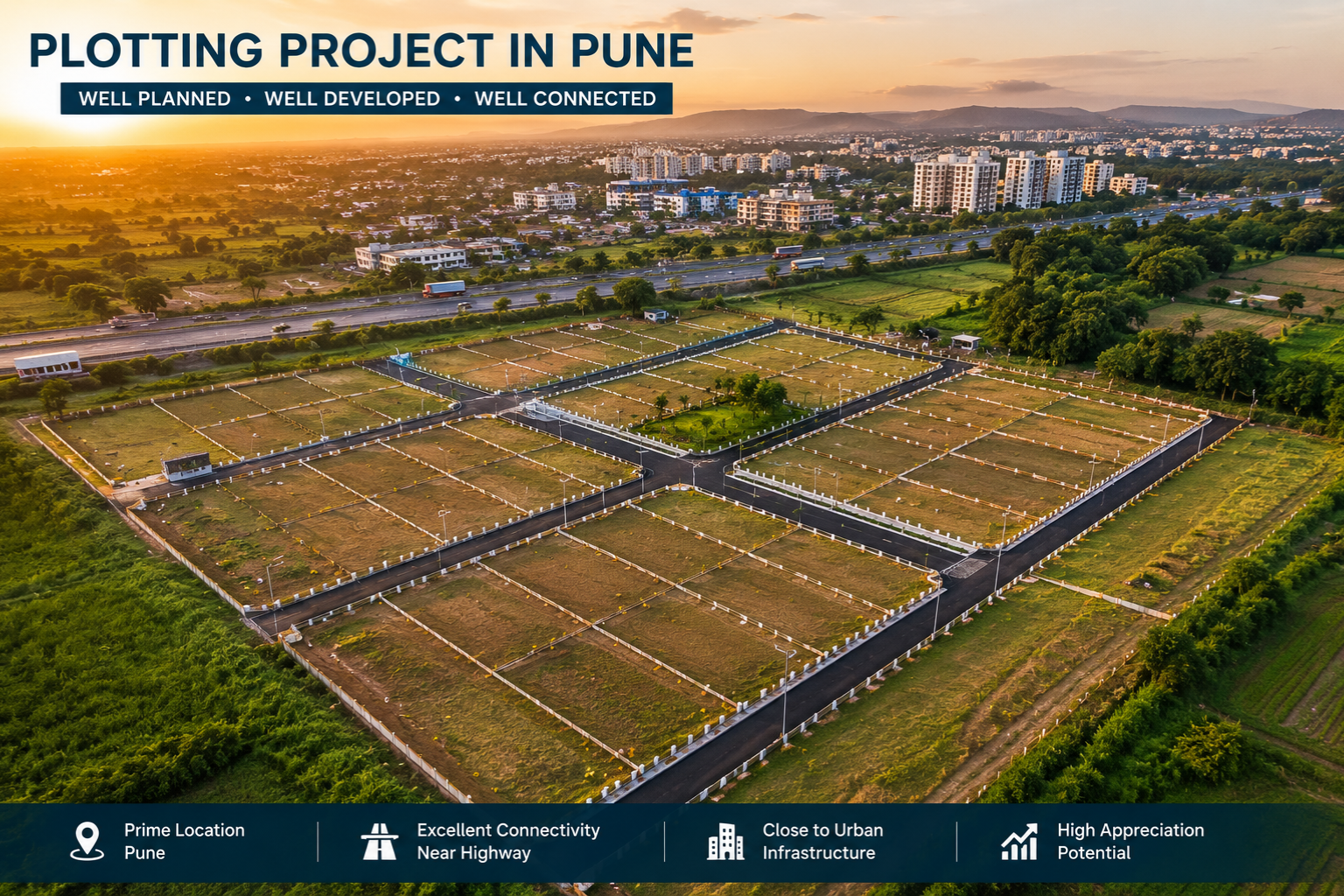
Third, video ads showcasing the project experience, not just the sales pitch. Drone walkthroughs of plotting projects, time-lapse construction progress for under-development properties, testimonial clips from actual buyers. Real content builds trust faster than static renders.
A real estate client ran a 60-second drone video of their plotting project showing road access, nearby schools, and the actual plots with dimensions marked. Cost per lead from that single video: ₹890. Their static image ads were running at ₹2,100 per lead. The video didn’t look expensive. It looked real.
Here’s the mistake we see constantly: running lead gen forms directly on Facebook without sending people to your website first. Yes, you’ll get more form fills. No, they won’t be qualified. A lead that never sees your site, your approvals, your floor plans, or your pricing is just a name in a spreadsheet.
Send traffic to your website. Retarget the ones who don’t convert. Let Meta nurture them with content until they’re ready.
Step 5: Invest in Video Production That Sells, Not Just Showcases
Most real estate videos are boring. Long pans across empty clubhouses. Slow zooms on lobbies. Inspirational music over generic footage.
Buyers want to see what they’re actually getting.
Shoot walkthroughs that answer questions, not videos that look cinematic. For plotting projects, show road access, plot dimensions, boundary walls, soil quality, water connection points, and nearby infrastructure. For residential projects, show actual unit layouts, natural light at different times of day, views from balconies, and storage spaces.
Make separate videos for separate questions. One video answering “Is this project RERA approved?” One showing “How far is the nearest metro station?” One walking through “What does the 1,200 sq ft plot actually look like?”
Short, specific, and searchable beats long and artistic every time.
We produced a series of 90-second videos for a residential project answering the top 12 questions their sales team heard on site visits. Each video was uploaded to YouTube with the question as the title. Those videos now rank on Google for those exact search queries and feed qualified traffic to the project website every week — without ad spend.
Use drone footage strategically. It’s powerful for showing scale, location advantages, and progress updates — but only if it’s stable, well-edited, and under two minutes. A shaky five-minute drone video kills interest faster than no video at all.
At Webcomp Digitex, we combine video production with SEO strategy from day one. Every video is titled, described, and tagged to show up in search. Every video has a clear CTA directing viewers to the next step. Video isn’t content marketing. It’s a conversion tool.
Step 6: Optimize for Local Search Because That’s Where Buyers Start
When someone searches “plotting projects near me” or “flats in Pimple Saudagar,” your project better show up. Not on page two. In the map pack. In the local results. Immediately.
Set up and fully optimize your Google Business Profile. Use your exact project name. Choose the right category (Real Estate Developer or Housing Society). Add your accurate project location. Upload high-quality photos every week — site progress, completed amenities, actual units, anything visual and current.
Respond to every review. Good ones and bad ones. Thank people for positive feedback. Address concerns in negative reviews professionally and publicly. Google ranks active, responsive profiles higher than abandoned ones.
Build local citations. Get your project listed on real estate portals, local directories, and map platforms with consistent NAM (Name, Address, Phone). Inconsistent information across platforms confuses Google and kills your local rankings.
Create location-specific landing pages on your website. If you’re targeting buyers from Hinjewadi, Wakad, and Baner, build separate pages optimized for “plotting projects near Hinjewadi” with content that speaks to that micro-market. Schema markup for real estate properties helps Google understand your listings and show rich results with pricing, availability, and images directly in search.
A residential project we worked with in Pune wasn’t showing up for any local searches despite having a website and active ads. We optimized their Google Business Profile, fixed NAM inconsistencies across six listing sites, and published location-based blog content. Local search visibility jumped from position 47 to position 3 in eleven weeks. Site visits from organic local search doubled.
Watch your Search Console data. If people are finding you for the wrong locations or wrong property types, your content isn’t clear enough. Tighten your targeting.
Step 7: Build a Follow-Up System That Doesn’t Let Leads Go Cold
You’ll lose more money in your follow-up than in your ads. That’s not an exaggeration.
A buyer fills out your form. What happens in the next five minutes? The next five hours? The next five days?
If your answer is “our sales team calls them when they can,” you’re losing deals.
Set up automated follow-up sequences through email and WhatsApp. First message goes out immediately — thank them for their interest, confirm you received their inquiry, set expectations for next steps. Second message within two hours — share a project brochure, video walkthrough, or FAQ document. Third message next day — offer to schedule a site visit or virtual tour.
Use a CRM to track every lead source, every touchpoint, and every stage of the journey. Zoho CRM, HubSpot, or even a well-organized Google Sheet is better than nothing. You need to know which marketing channel brought in the lead that became a booking. Otherwise, you’re optimizing blind.
We worked with a plotting project that was generating 90 leads a month but closing only four deals. Their sales team was calling leads once, maybe twice, then moving on. We implemented a structured follow-up system — five touchpoints over fourteen days, mixing calls, emails, and WhatsApp messages with helpful content, not just sales pitches. Close rate went from 4.4% to 11% in two months. Same leads. Better process.
Track response time religiously. Leads contacted within five minutes are nine times more likely to convert than leads contacted after an hour. Speed matters more than the perfect pitch.
Step 8: Measure What Actually Matters, Not What Looks Good in Reports
Clicks don’t pay your EMIs. Leads do. But not all leads are equal.
Track the full funnel: ad impressions, clicks, landing page visits, form submissions, phone calls, site visits, bookings, and sales. If you’re only measuring at the lead level, you’re missing where the real drop-off happens.
Set up conversion tracking in Google Analytics 4 and Google Ads for every meaningful action — form fills, phone clicks, brochure downloads, site visit bookings. Connect your CRM so you can see which leads turned into revenue, not just which campaigns generated the most names.
Calculate your actual cost per acquisition, not cost per lead. If you spent ₹1.8 lakh on ads, generated 60 leads, and closed three sales, your CPA is ₹60,000 per customer — not ₹3,000 per lead. That number tells you if your marketing is profitable.
A real estate developer in Pune was celebrating a campaign that generated 110 leads at ₹1,200 per lead. Looked great. But only two of those leads visited the site and neither booked. The next campaign generated 38 leads at ₹2,900 per lead — but twelve visited the site and five booked. The second campaign was far more profitable despite the higher cost per lead.
Run monthly attribution reports. Which channel is driving the most revenue? Which is driving the cheapest leads that never convert? Kill what doesn’t work. Double down on what does.
Real estate marketing isn’t about being everywhere. It’s about being where your buyers are, with the right message, at the right time, measured all the way to the sale.

Frequently Asked Questions
What is the best digital marketing strategy for real estate developers?
The best strategy combines Google Ads for high-intent search traffic, a fast conversion-focused website, retargeting through Meta Ads, locally optimized content, and professional video that answers buyer questions. Focus on decision-stage buyers first, not brand awareness.
How much should a real estate project spend on digital marketing?
Budget 3% to 7% of your expected project revenue on marketing, with at least 40% allocated to digital channels. A plotting project expecting ₹10 crore in sales should invest ₹30-70 lakh in total marketing, with ₹12-28 lakh in digital. Adjust based on competition and project stage.
How long does it take to see results from real estate digital marketing?
Google Ads can generate leads within 48 hours if set up correctly. SEO and organic visibility take 90 to 180 days. Video content and retargeting builds momentum over 60 to 90 days. Expect a three-month ramp-up period before campaigns hit consistent performance.
Which platform works better for real estate marketing — Google or Facebook?
Google Ads work better for capturing demand from buyers actively searching for properties. Meta Ads work better for retargeting and nurturing buyers who aren’t ready to decide yet. Use both strategically — Google for conversion, Meta for consideration.
How do I generate qualified leads for a plotting project in Pune?
Target location-specific keywords like “plotting projects in Pimple Saudagar” on Google Ads. Optimize your Google Business Profile for local search. Create video content showing actual plot dimensions, road access, and approvals. Run retargeting ads to website visitors. Track leads through to site visits, not just form fills.
Ready to Build Real Estate Digital Marketing That Actually Converts?
Most real estate projects don’t have a traffic problem. They have a conversion problem. Pretty websites that don’t answer buyer questions. Ads that attract the wrong audience. Follow-up systems that let warm leads go cold.
Webcomp Digitex builds real estate digital marketing systems designed for one outcome: qualified buyers who visit your site and move toward a decision. We combine conversion-focused websites, performance marketing, professional video production, and local SEO under one roof — so you’re not coordinating five vendors hoping they talk to each other.
We’ve worked with plotting projects, residential developers, and commercial real estate clients across Pune and beyond. We know what moves the needle because we measure all the way to the sale, not just the lead.
If you’re ready to stop guessing and start converting, let’s talk. Visit us at Webcomp Digitex, Pimple Saudagar, Pune, or reach out and we’ll walk you through exactly what an ROI-focused real estate marketing system looks like for your project.


