
Social Media Influencer Marketing in India: Micro vs Macro — Which Actually Works?
Three months ago, a healthcare client from Kharadi called me, frustrated. They’d just paid ₹4.5 lakhs to a macro influencer with 850K followers for three Instagram posts promoting their new physiotherapy clinic. The result? Forty-two enquiries. Only nine showed up. Three converted.
Do the math. That’s ₹1.5 lakh per customer.
“We thought bigger followers meant bigger results,” the founder told me. I get it. That’s what everyone thinks.
Here’s what actually happened next. We shifted their budget to eight micro-influencers in Pune — fitness trainers, yoga instructors, marathon runners with 8K to 25K followers each. Same budget, spread across three months of consistent posting and stories. The result? 340 enquiries. 127 showed up. 64 became paying customers.
Cost per customer dropped to ₹7,031.
This isn’t a one-off story. I’ve been working with businesses across Pune for over twelve years now, and I keep seeing the same pattern repeat. But it’s not as simple as “micro good, macro bad.” That’d be lazy advice, and honestly, wrong.
Let me tell you what I’ve learned about social media influencer marketing in India, specifically what works for businesses in Pune and why the micro vs macro debate misses the real point.
What Makes Influencer Marketing Different in India
Before we get into micro versus macro, you need to understand something: *influencer marketing in India doesn’t work like it does in the USA or UK. I’m not just talking about budgets — though yeah, that’s different too.
Indian audiences are incredibly savvy about paid promotions now. They can smell a forced partnership from a mile away. That Instagram post where the influencer suddenly talks about a product they’ve never mentioned before? Everyone knows what’s happening. Engagement drops. Trust erodes.
Here’s what I mean. A real estate client in Hinjewadi wanted to promote luxury apartments. We worked with a macro influencer who posted once, used all the right hashtags, had professional photos. Reach was great — 480K impressions. Engagement rate? 0.4%. Almost no one cared.
Then we tried something different. We found a Pune-based micro-influencer who genuinely writes about architecture and home design. She has 18K followers. We didn’t ask for one post. We gave her access to the property for a week, let her create content naturally, share her honest thoughts, show the space through her lens. Her posts got 6.2% engagement. People asked questions. They wanted site visits.
That’s the difference. Authenticity isn’t a buzzword here — it’s the whole game.
At Webcomp Digitex, we’ve managed social influencer marketing campaigns for manufacturers in Chakan, e-commerce brands, healthcare providers, and real estate developers. The pattern is clear: Indian audiences respond to genuine connection over polished perfection.
Understanding Micro Influencers: The Real Numbers
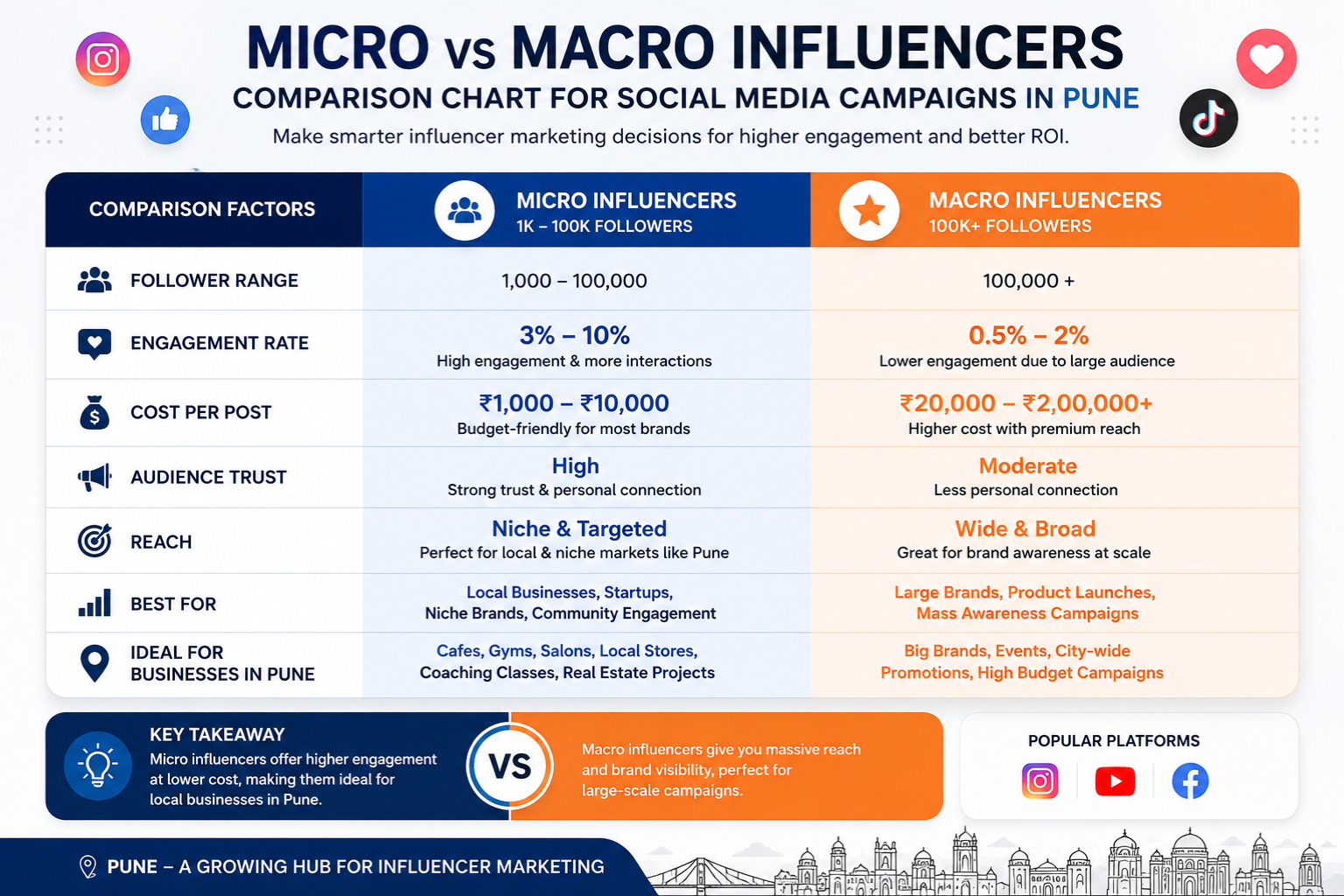
Let’s define what we’re talking about. Micro-influencers typically have 5K to 50K followers. Some people stretch that to 100K, but I think that muddies the water.
What makes them different isn’t just the follower count. It’s the relationship with their audience.
Think about it this way. When you have 12,000 followers, you can still respond to most comments. You know your regular commenters by name. You actually read your DMs. Your audience feels like they know you personally because, in a way, they kind of do.
A manufacturing client in Pimpri-Chinchwad makes premium cookware. They wanted to reach homemakers and cooking enthusiasts. We partnered with fifteen micro-influencers — food bloggers, home chefs, cooking tutorial creators across Maharashtra. Budget was ₹2.8 lakhs total over two months.
Each influencer created recipe videos using the cookware. Not just one post — a series. They showed the unboxing, first impressions, then actual cooking over weeks. They talked about heat distribution, cleaning, durability. Real details that matter when you’re actually cooking.
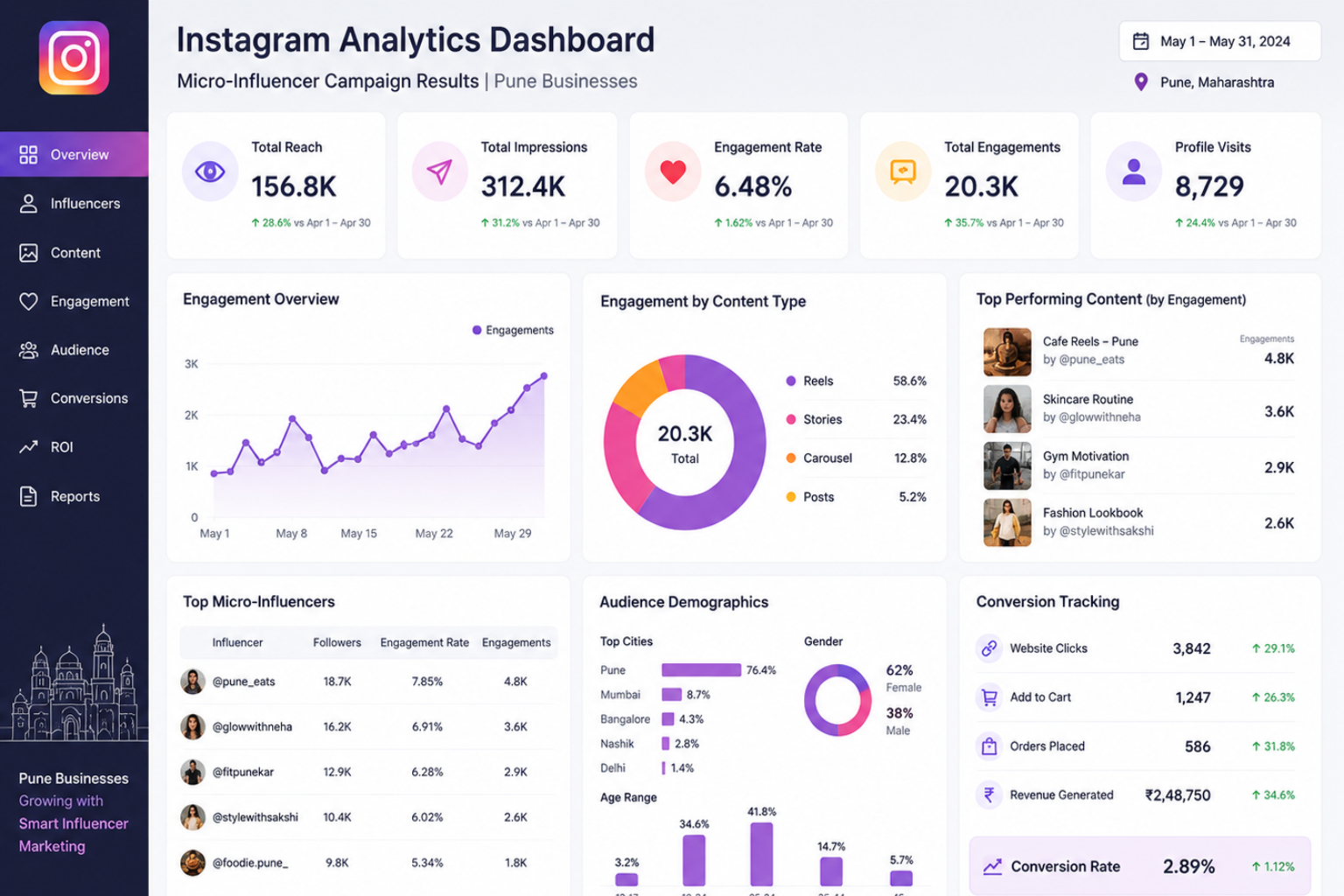
The campaign generated 1,247 direct sales through tracked links and promo codes. Beyond that, their website traffic from social media jumped 340%. Brand searches on Google increased by 180%.
Here’s something only someone who’s actually run these campaigns would know: the comment sections on micro-influencer posts are gold. People ask real questions. “Does it work on induction?” “Is it heavy?” “Where can I buy this in Pune?” That’s buying intent right there. We had our client’s team respond directly in those comment threads. That’s impossible to do at scale with macro influencers — the volume is too high, and most comments are just emojis or generic praise.
Micro-influencers give you:
- Higher engagement rates (typically 3-8% vs 1-2% for macro)
- Lower cost per post (₹3K to ₹25K vs ₹50K to ₹10 lakhs+)
- Better targeting (niche audiences that actually care about your category)
- Authentic voice (sounds like a recommendation, not an ad)
- Real relationships (their followers actually trust them)
But they’re not perfect. You can’t get massive reach with one post. You need to manage multiple relationships. Content quality varies widely. You won’t get the prestige of saying “we worked with [celebrity name].”
The Macro Influencer Reality Check
Macro influencers — those with 100K to 1M+ followers — aren’t useless. Let me be clear about that. But they work differently than most businesses expect.
I worked with an e-commerce fashion brand in Baner last year. They sold ethnic wear online, mostly targeting women 25-40 across India. For Diwali, we partnered with a macro fashion influencer with 650K followers. One reel, two static posts, three stories. Cost: ₹2.8 lakhs.
Reach was incredible. Over 900K impressions. Their Instagram following jumped by 4,200 people in three days. Website traffic spiked. They made ₹6.4 lakhs in sales during the campaign week.
That sounds great, right? It was. But here’s what the founder didn’t expect: sales dropped back to normal immediately after. The spike didn’t sustain. Most of those new followers never engaged again. The cost per acquisition was ₹700 — not terrible, but not amazing either.
Macro influencers are good for:
- Brand awareness at scale
- Reaching new geographic markets quickly
- Launching new products with a splash
- Building social proof (“as seen with [known personality]”)
- Creating content you can repurpose in your own marketing
They’re expensive, yeah. A mid-level macro influencer in India charges ₹50K to ₹3 lakhs per post. Top-tier can go to ₹10 lakhs or more. You’re paying for reach, not necessarily engagement or conversions.
Here’s my honest take after running dozens of these campaigns at Webcomp Digitex: macro influencers work best as part of a larger strategy, not as the whole strategy. They’re the billboard, not the salesperson.
What Actually Matters: Alignment Over Audience Size
Stop obsessing over follower counts. I know that’s hard. It’s the first number everyone looks at. But it’s not what determines campaign success.
I’ll give you a real example. A healthcare provider in Wakad wanted to promote preventive health checkups. They were deciding between two influencers:
Option A: 180K followers, general lifestyle content, posts about everything from travel to food to fitness. Engagement rate: 1.8%. Cost: ₹1.2 lakhs per post.
Option B: 22K followers, focused entirely on health, fitness, and wellness. Doctor by profession, shares evidence-based health information. Engagement rate: 6.4%. Cost: ₹15K per post.
Which would you choose?
They went with Option B and created a series of six posts over two months about preventive care, health screening importance, specific tests explained simply. They got 289 bookings directly attributed to the campaign. Cost per booking: ₹311.
For comparison, their Google Ads cost per booking was ₹1,840 at the time.
Alignment means:
- The influencer’s audience matches your target customer (not just demographics, but interests and intent)
- Their content style fits your brand (a luxury brand shouldn’t work with an influencer who does constant discount promotions)
- Their values align with yours (if you’re eco-friendly, don’t partner with someone who promotes fast fashion)
- They actually use or would use your product (fake enthusiasm is obvious)
This is where working with a social media marketing agency like Webcomp Digitex helps. We don’t just pull a list of influencers sorted by follower count. We dig into their content history, audience demographics from their Media Kits, past brand partnerships, comment quality, story engagement, even the time they post and response patterns.
I’m not saying you can’t do this yourself. But it takes time. For that healthcare client, we reviewed 47 potential influencers before shortlisting eight for the campaign. That’s hours of scrolling, analyzing, checking fake follower percentages using tools, reading through months of comments.
The Hybrid Approach: What’s Working Now
Here’s what I’m seeing work really well in 2024 for businesses in Pune and across India: don’t choose between micro and macro. Use both strategically.
Think of it like building a pyramid. Macro influencers are the top — broad reach, awareness, prestige. Micro-influencers are the base — engagement, trust, conversions. You need both, but in different proportions depending on your goals.
A real estate developer in Baner launching a new project used this approach:
Phase 1 (Awareness): Two macro influencers with 400K and 550K followers posted about the project location, showed drone footage, talked about the Baner area development. Goal: get the project on people’s radar. Budget: ₹4.2 lakhs.
Phase 2 (Consideration): Ten micro-influencers — home decor enthusiasts, interior designers, architects, real estate advisors in Pune with 8K to 35K followers — did site visits, talked about specifications, shared floor plans, discussed investment potential. Goal: provide detailed information to serious buyers. Budget: ₹2.6 lakhs.
Phase 3 (Conversion): Five nano-influencers (1K to 5K followers) who were actual customers shared their buying journey, why they chose this project, showed their booking process. Goal: provide social proof and overcome final hesitations. Budget: ₹40K.
Total campaign cost: ₹6.8 lakhs. They sold 34 units directly attributed to influencer marketing in four months. Average unit value: ₹68 lakhs. You do the math on that ROI.
The key was sequencing. Awareness first, then details, then proof. Each influencer tier played a specific role.
This is how we structure most campaigns at Webcomp Digitex now. Single-tier influencer marketing rarely gives the best results unless you have a very specific, narrow goal.
Platform Matters More Than You Think
Instagram isn’t the only social influencer marketing platform that works in India. Honestly, for some businesses, it’s not even the best one.
YouTube works incredibly well for detailed product reviews, tutorials, demonstrations — anything that needs more than 60 seconds to explain. A manufacturing client in MIDC makes industrial safety equipment. Instagram influencers weren’t right. We partnered with YouTube creators who focus on workplace safety, manufacturing processes, industrial training. Their videos are 8-15 minutes long, go deep into technical specs, show actual usage.
Those videos are still driving traffic and enquiries eighteen months later. That’s the beauty of YouTube — content doesn’t disappear in 24 hours.
LinkedIn is massively underrated for B2B. If you’re selling to businesses, forget Instagram celebrities. Find thought leaders in your industry with 5K to 20K LinkedIn followers. Their posts, articles, and comments reach decision-makers directly.
Even Facebook still works, especially if your audience is 35+. Parenting influencers, home and garden content, health and wellness for older demographics — Facebook engagement is strong there.
Here’s a practitioner insight: cross-platform influencers (those active and engaged on multiple platforms) often give better overall results because they can activate their audience in different contexts. Someone might see an Instagram post, forget about it, then see a YouTube review two weeks later and finally decide to buy.
How to Avoid Getting Burned
Let me tell you what goes wrong, because I’ve seen it all.
Fake followers are still rampant. I reviewed an influencer last month with 140K followers. Looked impressive. Then I checked the engagement. Average of 230 likes per post. Maybe fifteen comments, most of them emoji-only. That’s a 0.16% engagement rate. Dead giveaway.
We use tools to check follower quality before recommending anyone. You can spot fakes by looking at follower growth patterns (sudden jumps are suspicious), comment quality (real people write sentences, bots leave emojis), and engagement consistency (genuine accounts have steady patterns).
Another common mistake: one-post campaigns. I get it — you want to test, you don’t want to commit too much budget upfront. But here’s the thing: one post gets lost in the feed immediately. Stories disappear in 24 hours. You need repetition for people to remember and act.
The healthcare client I mentioned earlier with the physiotherapy clinic? Their failed macro campaign was one post. When we switched to micros, we did minimum three posts plus five stories per influencer over four weeks. That repetition mattered.
Also, don’t ignore the contract. Seriously. Spell out deliverables clearly. How many posts, what format, when they’ll go live, what happens if they don’t meet deadlines, whether they can promote competitors for how long, usage rights for the content they create. I’ve seen relationships fall apart over assumptions that weren’t documented.
At Webcomp Digitex, we handle all contracting for our clients. It’s boring work, but it prevents headaches later.
Measuring What Actually Matters
Vanity metrics are seductive. Impressions! Reach! Likes!
But what matters for your business?
For most clients, it’s:
- Enquiries or leads generated
- Cost per lead or cost per acquisition
- Actual sales (tracked through promo codes, UTM links, or direct attribution)
- Website traffic from social platforms
- Quality of leads (are they in your target market, or just random people?)
We set up tracking before campaigns launch. Unique promo codes for each influencer. Custom UTM parameters on links. Dedicated landing pages. Sometimes even unique phone numbers to track calls.
Google Analytics 4 is your friend here. You can see exactly which traffic source drove which conversions. Connect it with your CRM if you have one.
But also measure softer stuff. Are you getting tagged in stories by potential customers who saw the influencer post? Are people mentioning the influencer’s content when they enquire? Are branded search terms increasing?
For that cookware manufacturer in Pimpri-Chinchwad, we noticed something interesting in Google Search Console three weeks into the campaign. Searches for “[brand name] review” and “[brand name] vs [competitor]” jumped significantly. People were seeing the influencer content, then doing their own research before buying. That’s valuable even if they didn’t use the discount code.
The real question is: does the campaign economics work for your business? If you spend ₹2 lakhs and generate ₹8 lakhs in sales with acceptable margins, it works. If you spend ₹2 lakhs and get a bunch of likes but no sales, it doesn’t. Simple as that.

The India-Specific Considerations
Look, influencer marketing agency USA best practices don’t always apply here. India is different.
Regional language content massively outperforms English-only content for most consumer categories. A food delivery app campaign we consulted on tested this — the same influencer created content in English and Marathi. The Marathi posts got 4.3x more engagement in Pune.
Festival timing is critical. Diwali, Dussehra, Ganesh Chaturthi, Holi — these aren’t just holidays, they’re peak buying seasons. Influencer rates go up 30-50% during festival months because everyone wants to campaign then. Plan ahead.
Price sensitivity is real. Indian consumers are smart shoppers. They compare prices, wait for discounts, negotiate. Your influencer content needs to address value, not just aspiration. Show why it’s worth the price.
Local context matters. An influencer talking about a Pune business should show Pune locations, reference local landmarks, maybe even speak in the Puneri accent. That authenticity resonates.
Payment terms can be tricky. Some influencers want full payment upfront. Others are okay with 50% advance. Bigger names often work through talent agencies who have standard terms. Just know this going in and plan your cash flow accordingly.
Frequently Asked Questions
How much should I budget for influencer marketing in Pune?
Honestly, it depends on your goals and industry. I’ve seen successful campaigns for ₹50,000 and unsuccessful ones for ₹5 lakhs. As a general rule, start with whatever you’d spend on Facebook or Google ads for a month and test influencer marketing with that. For most SMBs in Pune, ₹1-3 lakhs quarterly is a realistic starting point that can deliver measurable results if spent wisely. Don’t blow your entire marketing budget on one macro influencer. Spread it across multiple micros and test what works.
How do I find the right influencers for my business?
Start by searching hashtags related to your industry on Instagram and YouTube. Look who’s consistently creating content in your space. Check who your competitors are working with. Use platforms like QORUZ or Influencer.in to search by category and location. But here’s what really matters: spend time actually consuming their content. Read the comments. See how they engage. Make sure their vibe matches your brand. At Webcomp Digitex, we spend hours doing this research because there’s no shortcut. The right influencer fit matters more than fancy media kits.
Should I give influencers free products or pay them?
Both, ideally. Micro-influencers are sometimes willing to post in exchange for free products, especially if they genuinely like what you offer. But for a proper campaign with specific deliverables and timelines, you should pay. Even small amounts — ₹3K to ₹5K plus free product — shows respect for their work and gives you the right to expect professional behavior. Anyone with over 15K-20K engaged followers will expect payment. Don’t be the brand that tries to get everything for free through “exposure.” It’s 2024, and influencers have heard that too many times.
How long should an influencer campaign run?
Minimum four to six weeks for consumer products, longer for high-consideration purchases like real estate or healthcare. One-off posts rarely work unless you’re just doing a massive awareness push with a macro influencer. The repetition matters. People need to see something multiple times before they act. We typically structure campaigns in 2-3 month cycles with consistent posting schedules. That gives enough time to build awareness, nurture consideration, and drive conversions.
What if the influencer posts something I don’t approve of?
This is why content approval should be in your contract. We always include a clause that the brand gets to review and approve content before it goes live. Most professional influencers are fine with this — they want you to be happy. Just don’t be ridiculous with change requests. If you hired them for their creative voice, let them use it. Feedback should be about factual accuracy and brand alignment, not completely rewriting their caption in corporate speak. Trust the influencer’s understanding of their audience, but protect yourself with approval rights.
Ready to Start Your Influencer Campaign?
Here’s what I know after twelve years of doing this work in Pune: social media influencer marketing works when it’s strategic, authentic, and properly measured. It doesn’t work when you chase follower counts or expect one Instagram post to transform your business overnight.
The micro versus macro debate isn’t really the question. The question is: who has the trust of your target audience, and how can you partner with them in a way that serves both their followers and your business goals?
At Webcomp Digitex, we’ve helped manufacturers in Chakan, real estate developers in Hinjewadi, healthcare providers in Kharadi, and e-commerce brands across Pune build influencer marketing campaigns that actually deliver measurable results — not just likes and impressions, but real enquiries and sales.
If you’re thinking about influencer marketing but aren’t sure where to start, or if you’ve tried it before and got burned, let’s talk. We’ll look at your business, your goals, your budget, and figure out an approach that makes sense for you.
Call us at +91-9960802498 or visit webcompdigitex.com. We’re based in Pune, we work with businesses like yours every day, and we’re pretty good at cutting through the noise to find what actually works.
No pressure. Just real conversation about whether influencer marketing is right for your business, and if it is, how to do it properly.


