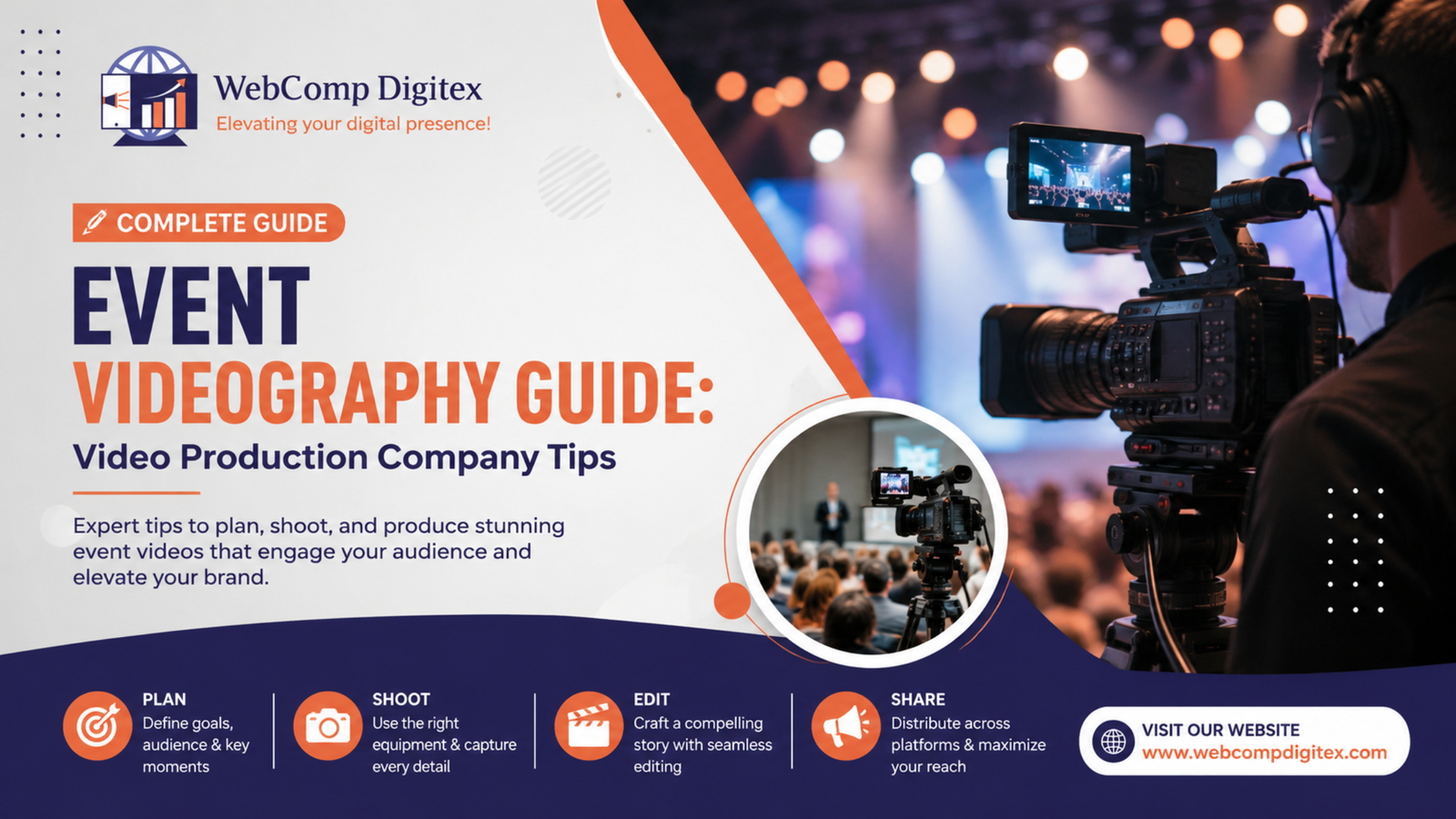
Event Videography for Corporates: What a Video Production Company Should Actually Deliver
You’re planning a corporate event. Could be a product launch at a Hinjewadi hotel, an anniversary celebration in Baner, or a dealer conference in one of those sprawling banquet halls in Wakad.
And someone on your team says, “We should get this professionally filmed.”
Good idea. But here’s where it gets tricky. You start calling corporate video production companies, and everyone promises you “cinematic quality” and “storytelling excellence” and “seamless delivery.” The quotes range from ₹35,000 to ₹2,50,000. And honestly? You have no idea what you’re actually paying for or what you should expect.
Let me walk you through what event videography actually looks like when it’s done right — and what to watch out for.

What Most Corporate Video Production Companies Promise vs. What You Actually Get
I’ve seen this play out dozens of times with clients across Pune.
What they promise: A highlight reel within 5 days, full event coverage, multiple camera angles, professional audio.
What you often get: A 3-minute video delivered 18 days later with decent visuals but audio that sounds like it was recorded in a fish tank. The CEO’s speech? Barely audible. The panel discussion that was the heart of your event? Cut down to 20 seconds of generic b-roll.
Here’s the thing most corporate video production companies won’t tell you upfront: the quality of your final video depends less on their camera equipment and more on three specific things they do (or don’t do) before your event even starts.
Pre-event planning makes or breaks everything. A good video production company will insist on a pre-production meeting. Not a phone call. An actual meeting where they ask uncomfortable questions like:
- What’s the actual objective of this video? (Not “capture the event” — that’s not an objective)
- Who needs to watch this and what should they feel?
- What are the 3-4 moments that absolutely cannot be missed?
- What’s your timeline for using this footage?
We worked with a manufacturing client in Chakan last year — their annual dealer meet. They’d hired a video team before (spent ₹85,000) and got footage that looked nice but wasn’t useful. This time, we spent 90 minutes in pre-production. We learned the real goal wasn’t just “coverage” — they needed specific testimonial clips from their top 10 dealers that the sales team could use in follow-ups. Completely changed how we approached the shoot. Final cost was actually lower (₹72,000), but the sales team used those clips for 8 months afterward.
Audio setup happens before guests arrive. You can forgive slightly soft focus. You cannot forgive audio where your MD’s keynote is drowned out by the air conditioning or sounds like he’s speaking from inside a cardboard box. Professional event videography means wireless lav mics on speakers, a direct feed from the venue’s sound system (if they have one worth using), and backup recorders. This setup happens at least 45 minutes before your event starts, not 5 minutes.
Shot list vs. documentary style. Some videographers work from a shot list — they capture what you asked for. Others work documentary style — they capture what happens and figure out the story later. Neither is wrong, but you need to know which approach your video production company uses. For a tightly scripted product launch, you want shot list. For a two-day conference with panel discussions and networking, documentary style often captures better moments.
The Real Cost Breakdown: What You’re Actually Paying For
Let’s talk money. Because the price difference between a ₹40,000 quote and a ₹1,80,000 quote isn’t always clear.
Basic event coverage (₹35,000 – ₹60,000): Single camera operator, basic editing, one deliverable (usually a 3-5 minute highlight reel). This works fine for internal events where you just need proof it happened. Think team offsites, small training sessions, informal celebrations.
Professional multi-camera setup (₹75,000 – ₹1,50,000): Two to three cameras, dedicated audio engineer, professional lighting for stage coverage, multiple deliverables (highlight reel + full-length recordings of key sessions). This is the sweet spot for most corporate events — product launches, annual meetings, important conferences.
Premium production (₹1,80,000+): Four or more cameras, drone footage, same-day edit capability, live streaming, motion graphics, and a production coordinator managing the whole thing. You’re paying for the ability to turn your event into marketing content that looks like a TV production.
Here’s what I’ve noticed working with corporate video production companies in Pune: the mid-tier option (₹75k-₹150k) delivers the best return for most businesses. You get multiple angles, clean audio, and footage that’s actually usable afterward. The basic tier often leaves you wishing you’d spent more. The premium tier is overkill unless you’re a large enterprise or your event is a major brand moment.
A real estate client in Pimpri-Chinchwad learned this the expensive way. They spent ₹2,20,000 on premium coverage for a project launch. Looked gorgeous. But when we analyzed how they actually used the footage over the next 6 months, they could’ve gotten 90% of that value from an ₹85,000 package. We adjusted for their next launch and saved them money while delivering what they actually needed.
The Deliverables Question: What Format and How Many Versions?
This is where things get messy if you don’t ask specific questions upfront.
Most video production company quotes will say something vague like “edited video delivered in HD.” But here’s what you actually need to know:
How many versions are you getting? One 4-minute highlight reel might be in the contract. But can you also get:
- A 60-second version for social media?
- A 15-second teaser?
- Individual clips of each speaker’s presentation?
- Raw footage files?
Sometimes these are included. Often they cost extra. And you won’t find out until after the event when you casually mention, “Hey, can you also give us a short Instagram version?” and they say, “Sure, that’ll be ₹15,000 for additional editing.”
What formats and specifications? If you’re posting on YouTube, you need 16:9 ratio. Instagram feed is 1:1 or 4:5. Stories and Reels are 9:16. A good corporate video production company will deliver in multiple formats. An average one will give you 16:9 and make you pay extra for the rest.
What about the raw footage? Some videographers will give you all the raw files. Others consider them proprietary and only provide the edited final cut. If you think you might want to re-edit or pull additional clips later, nail this down in writing before you sign anything.
Revision policy? Most contracts include one or two rounds of revisions. But what does that actually mean? Can you request different music, or is that considered a “major revision”? Can you ask them to swap in a different clip of the CEO, or is the first draft final once they’ve sent it?
We’ve built relationships with several corporate video production companies here in Pune, and honestly, the best ones are upfront about all this. They send you a deliverables checklist before the event. The ones who are vague about it? Usually because they’re planning to nickel-and-dime you afterward.
Timeline Reality Check: When Will You Actually Get Your Video?
Here’s a common scenario: Your event is on Saturday. You need the video for your Monday morning all-hands meeting. Is that possible?
Sometimes. But probably not.
Rush delivery is technically possible but creatively limiting. A video production company can deliver a rough cut in 24-48 hours if you really need it. But it’ll be basic — decent cuts, stock music, minimal color grading, no motion graphics. If that works for your purpose, great. Just know what you’re getting.
Standard delivery is 7-10 business days. That’s enough time for proper editing, color correction, audio mixing, one round of revisions, and final delivery. This is what most professional event videography teams need to do good work.
Complex projects take 2-3 weeks. If you want motion graphics, multiple versions, interviews cut into the event footage, or extensive color grading, you’re looking at longer timelines.
The disconnect happens when clients assume a 3-minute video should be quick because “it’s only 3 minutes.” But here’s what actually goes into it: The editor watches all the footage (for a 6-hour event, that’s 6+ hours across multiple cameras, so really 20-30 hours of footage). They make selects. They build a rough timeline. They finesse the cuts. They sync and mix audio. They color grade. They render multiple times. A polished 3-minute video from a full-day event can take 15-20 hours of editing time.
One healthcare client in Kharadi needed a video from their medical conference. We were clear upfront: standard delivery was 10 days. They pushed for 5 days because they wanted it for a follow-up campaign. We delivered in 5 days, but with the understanding that motion graphics would be minimal. They were happy because expectations were set correctly from the start.
What Separates Good Corporate Video Production from Great
Look, most video production companies in Pune have decent cameras. They know how to frame a shot. They understand basic editing.
But here’s what separates the ones who deliver footage from the ones who deliver something you’ll actually use:
They understand business context, not just video. When a video team asks, “What’s your sales cycle?” or “How does your distribution team actually use content?” — that’s a good sign. They’re thinking about how this video fits into your bigger marketing picture.
At Webcomp Digitex, we’ve produced event videos for clients across manufacturing, real estate, healthcare, and e-commerce here in Pune. The difference in usefulness comes down to understanding what happens after the event. A manufacturing company in MIDC needs dealer testimonials they can send in WhatsApp. A real estate developer needs social proof for their digital ads. A hospital needs clips that explain their facility to referring doctors. Same event, completely different video strategy.
They capture the in-between moments. Anyone can film the stage. Good videographers also capture the networking breaks, the audience reactions, the informal conversations. That’s often where the real energy of your event lives. And it’s what makes your video feel authentic instead of like a corporate PowerPoint brought to life.
They make your speakers look good. Honestly, this matters more than people admit. Your CEO isn’t a professional presenter. He might fidget, lose his place, or say “um” 47 times. A good editor makes him look confident and articulate. Not through dishonesty — through smart cutting, choosing the right takes, and pacing that maintains energy.
They mix audio properly. I’m harping on this again because it’s the #1 thing that makes corporate videos unwatchable. Great visuals with bad audio = unusable video. Decent visuals with clean audio = totally usable. Professional videographers know this. They spend as much time on audio in post-production as they do on color grading.

The Questions You Should Ask Before Hiring a Video Production Company
Don’t just pick based on their reel or their price. Ask specific questions:
“Can you show me an event video you’ve done that’s similar to ours?” Not their best work. Not the high-budget corporate video that won awards. A real event video for a company like yours with a budget like yours.
“What’s your backup plan if equipment fails?” Professional teams have backup cameras, backup audio recorders, backup lighting. If they pause or seem unsure, that’s a red flag.
“Who specifically will be filming our event?” Sometimes you hire a video production company but they subcontract the actual filming to freelancers. Nothing wrong with that if the freelancers are good. But you should know.
“What’s included in your day rate and what costs extra?” Is travel included? Setup time? Breakdown time? Overtime if your event runs long? I’ve seen quotes that looked great until you added all the “extras” and the price jumped 40%.
“How do you handle last-minute changes?” Because something will change. The venue will shift the schedule. A VIP guest will arrive late. Your panel discussion will run over. Good teams roll with it. Inexperienced teams get flustered.
“What’s your revision process?” Get specifics. How many rounds? What turnaround time between rounds? What happens if you need changes after “final” delivery?
Small Event vs. Large Conference: Different Approaches
The videography approach for a 50-person product launch is completely different from a 500-person conference. But corporate video production companies don’t always adjust their approach.
Small events (under 100 people): You might only need a two-person crew. One on camera, one on audio. Focus can be tight — you’re probably capturing one main stage area and some b-roll. The advantage is you can be nimble, personal, catch intimate moments.
Medium events (100-300 people): You want at least three cameras. One wide shot of the stage (this is your safety), one for close-ups of speakers, one roaming for audience reactions and cutaways. This gives your editor options and prevents the final video from feeling static.
Large conferences (300+ people): You’re essentially running a mini TV production. Multiple stages might need coverage. Breakout sessions. You might need a dedicated production coordinator just managing the video team’s schedule. And you should seriously consider whether you want session recordings as separate deliverables vs. trying to cram everything into one highlight reel.
We produced videos for a two-day real estate conference in Baner last year — about 400 attendees, three simultaneous tracks, multiple panel discussions. The client initially wanted “one video that captured everything.” We pushed back. Instead, we delivered: one 4-minute event highlight reel, plus individual recordings of the six main sessions, plus a 60-second teaser. Way more useful. They used the main sessions for follow-up marketing, the highlight reel for internal communication, and the teaser for promoting next year’s event.
Red Flags: When a Video Production Company Isn’t Worth It
Sometimes the warning signs are obvious. Sometimes they’re subtle.
They show you an impressive reel but can’t show you full event videos. A reel is a greatest hits package. It tells you they can film nice shots. It doesn’t tell you if they can cover a full event coherently.
Their quote has zero detail. “Event videography: ₹75,000” isn’t a quote. That’s a number. A real quote breaks down what you’re getting, what’s included, what timeline, what deliverables.
They promise everything you ask for without any pushback. Wait, that sounds like a good thing, right? It’s not. A professional video production company should push back sometimes. “You want drone footage inside the banquet hall? That won’t work because…” They should guide you, not just say yes to everything.
They don’t ask about your brand guidelines or visual identity. If they’re not asking what colors, fonts, or style match your brand, they’re planning to deliver generic work.
Their contract is suspiciously short. A professional contract should cover deliverables, timeline, revision policy, ownership of footage, cancellation terms, payment schedule. If it’s a one-page document, important stuff is probably missing.

Frequently Asked Questions
How much should I budget for corporate event videography in Pune?
For a professional two-camera setup with good audio and a polished highlight reel, expect ₹75,000 to ₹1,20,000 for a single-day event. That’s the range where you get quality work without overpaying. If someone quotes ₹30,000, you’re probably getting one camera and basic editing. If they quote ₹2,50,000, ask exactly what that includes — it should be a multi-camera setup with premium features like live streaming or same-day editing.
What’s the difference between event videography and event documentation?
Event documentation is filming what happened — think of it as a visual record. Event videography is creating a story from what happened. Documentation is valuable for archives or internal reference. Videography is valuable for marketing, sales enablement, and external communication. Most corporate clients actually want videography but initially ask for documentation. A good video production company will clarify this distinction upfront.
Should I hire a videographer or a full video production company?
For simple internal events, a skilled freelance videographer might be perfect and more affordable. For anything client-facing or brand-critical, go with a corporate video production company. The difference is backup (equipment and personnel), experience managing complex shoots, and established workflows. If your event absolutely cannot have video problems, pay for the reliability of a company.
How long should my corporate event video be?
For a highlight reel, aim for 3-5 minutes maximum. People’s attention drops off sharply after that. If you have longer content (like a keynote speech), deliver it as a separate piece. At Webcomp Digitex, we often recommend a tiered approach: 60-second teaser for social media, 3-4 minute highlight reel for your website and email, and full-length recordings of key sessions for those who want deep dives.
Do I own the footage after the video is delivered?
This depends on your contract, which is why you need to ask before signing anything. Some corporate video production companies grant you full ownership of everything, including raw footage. Others retain ownership and grant you a license to use the edited video. Neither is wrong, but you need to know. If you think you’ll want to re-edit later or pull clips for different purposes, negotiate for full ownership upfront.
What if my event runs longer than scheduled?
Most professional video production company contracts specify coverage hours and an overtime rate. Typical is 8 hours of coverage with overtime charged by the hour after that. If your event might run long, either build buffer time into your original contract or accept you’ll pay extra. Don’t assume the team will just stay — they might have another commitment that evening.
Let’s Capture Your Next Corporate Event the Right Way
Look, event videography isn’t complicated once you understand what questions to ask and what to expect. But it does require partnering with a video production company that gets the business context, not just the technical execution.
At Webcomp Digitex, we’ve produced corporate event videos across Pune — from Hinjewadi tech parks to MIDC manufacturing facilities to hotel conferences in Baner and Wakad. We understand what Pune businesses actually need: footage that serves a purpose beyond just “we filmed our event.”
Whether you’re planning a product launch, annual dealer meet, customer conference, or team celebration, we’ll help you figure out the right approach and budget before you commit to anything.
Call us at +91-9960802498 or visit webcompdigitex.com. Let’s talk about your event — what you’re trying to accomplish, who needs to see the video, and how to capture it in a way that actually gets used afterward.
We’re based in Pune, we know the venues, and we’ve worked with enough corporate clients to know exactly what works and what’s a waste of money.


